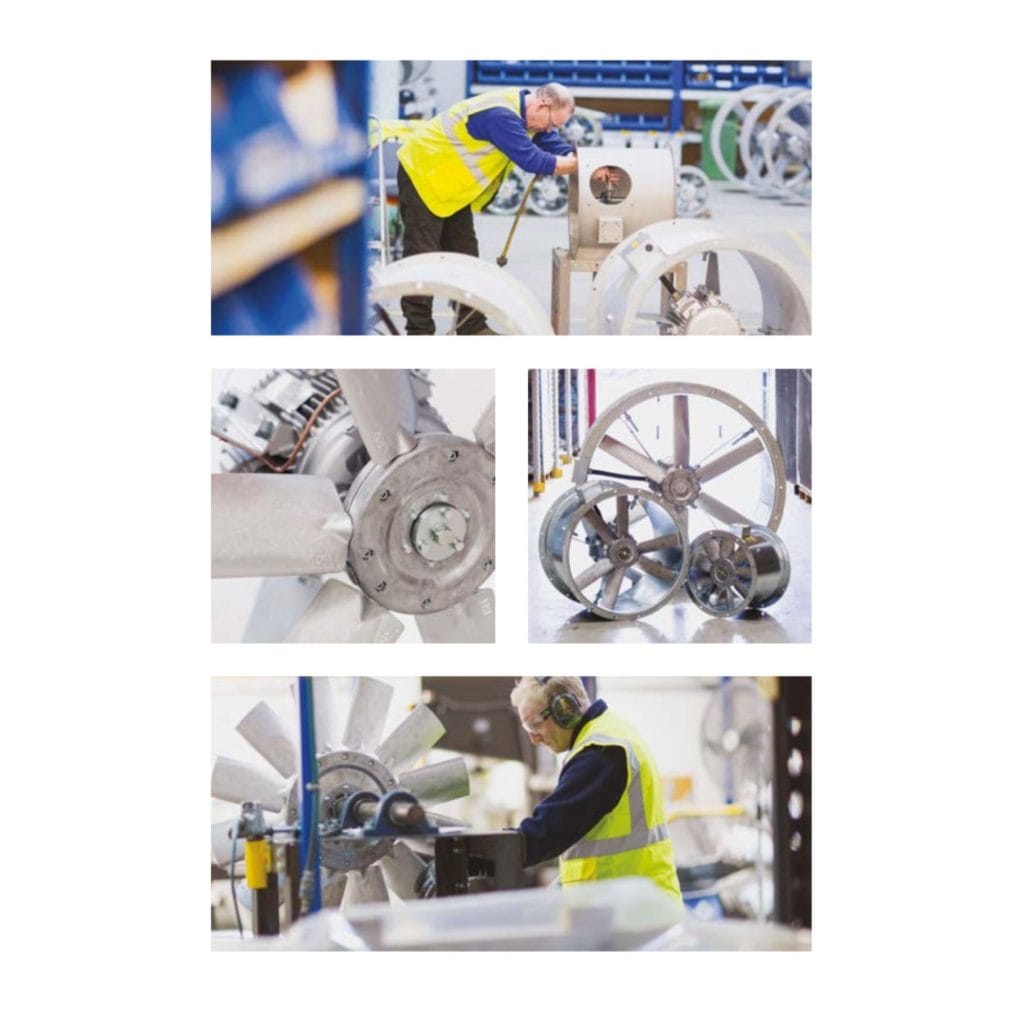
Emergency Extract Ventilation
B-EV020
Emergency extract ventilation systems are critical for ensuring safety in buildings during fire emergencies. Their primary function is to manage smoke, heat, and toxic gases, thus maintaining safe escape routes for occupants. This not only prolongs the tenability of these routes but also increases the chances of survival during a fire incident.
Key Functions and Regulations
1.  Smoke Control: These systems prevent the accumulation of smoke, which can hinder visibility and pose serious health risks. They often include features like automatic opening windows and vents, which are typically mandated by building regulations such as Approved Document B in the UK .
2.  Compliance: The Regulatory Reform (Fire Safety) Order 2005 requires that all fire safety systems, including smoke ventilation, be properly maintained and serviced. Compliance with British Standards (e.g., BS7346 and BS-EN 12101) is essential, and regular testing is recommended to ensure these systems function correctly during an emergency .
3.  Maintenance and Testing: Regular maintenance and testing are vital. It is recommended that smoke control systems undergo weekly operational tests, while servicing should occur at least annually. These procedures help ensure all components are functional and extend the lifespan of the systems .
Installation and Components
• Systems may include various components like smoke dampers, powered exhaust ventilators, and natural ventilation openings. These components must be tested to ensure they activate properly during emergencies .